
Bus Traffic Fever Mystery Buses: Question-Mark Board Guide
Treat a question-mark bus as unknown color information when planning the next passenger wave. Check the visible buses and their paths first, then recheck the revealed bus before dispatching it. A hidden color is different from a blocked path; use the matching level walkthrough to confirm the reveal sequence.
What are the question-mark buses in Bus Traffic Fever?
The question-mark buses shown in this wiki’s board screenshots conceal the color information you normally use to match a bus with passengers. Treat that color as unknown while planning. You can still examine the surrounding layout, but the screenshot alone does not tell you which passenger wave a hidden bus will serve.
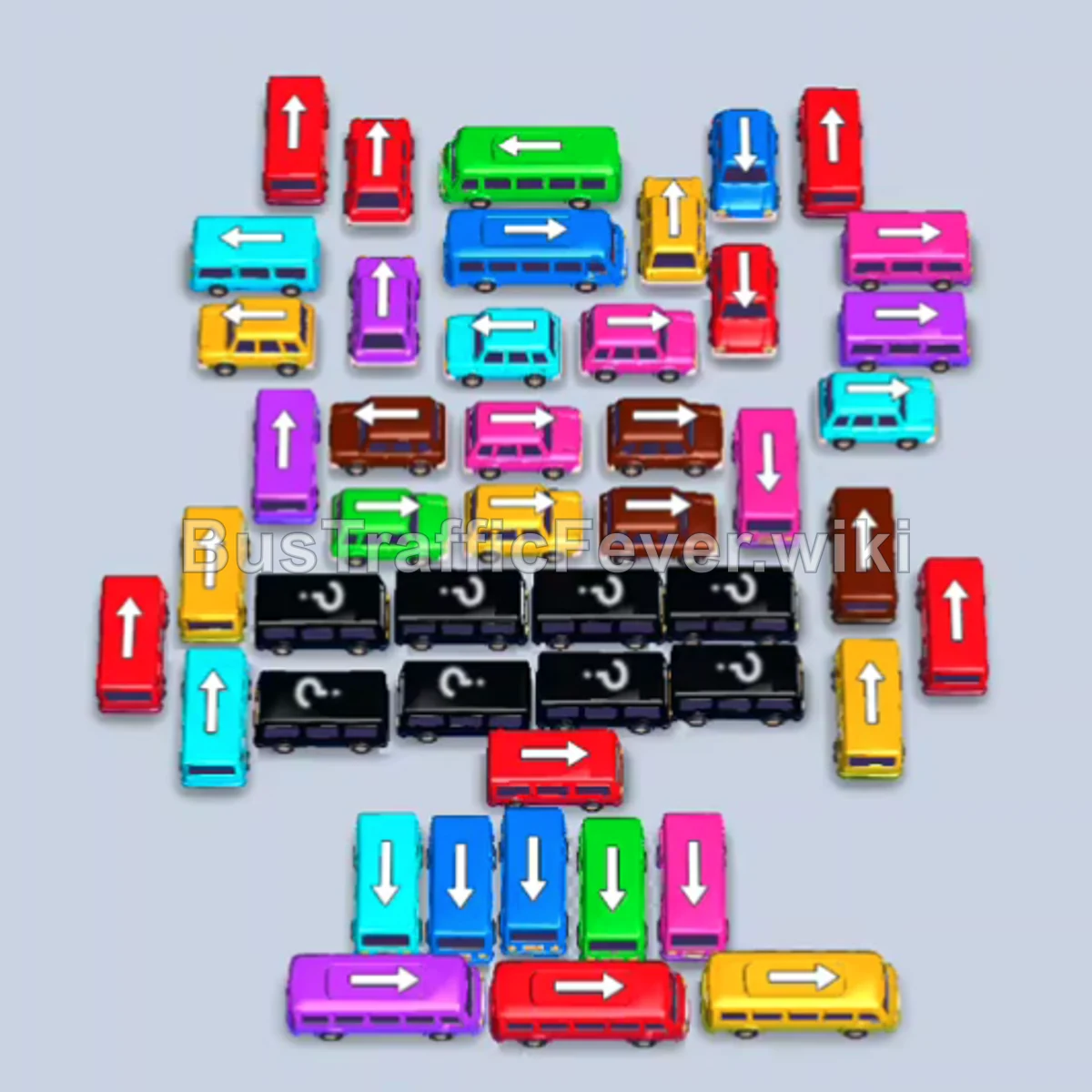
The Level 370 board shows several black question-mark buses below the colored upper grid. Its written guide later describes Purple buses revealed from mystery spaces. That is a detail of the linked solution, not a rule that every question-mark bus contains Purple.
For the basic color-matching rules, start with how to play Bus Traffic Fever. This guide focuses on reading hidden information rather than providing a replacement tap order for each board.
Is a mystery bus the same as a blocked bus?
No: hidden color and blocked access are different things to check. A visible colored bus can have another bus in its path, while a question-mark bus lacks confirmed color information. Do not infer that moving a nearby bus will both expose the color and make the route usable in the same action.
Before the next move, separate your observations:
- Known color: visible on the bus now, rather than guessed from nearby buses.
- Known path: checked against the bus’s visible orientation and surrounding obstacles.
- Known boarding opportunity: supported by the current passenger queue or the matching walkthrough.
If the problem is a bus refusing to leave the grid, use the buses-not-moving checklist to check access before assuming the question mark is the cause.
How should you plan around colors you cannot see yet?
Build the next part of the sequence around confirmed information. Identify which visible bus can serve the current passengers and what must move to reach it. Do not spend your last available bay on the assumption that a hidden bus will have the color you need; that assumption is not established by its position.
The Level 332 written walkthrough separates an opening phase with known Orange, Magenta, Purple, and Cyan buses from a later central-grid phase that uncovers mystery buses. This gives you a useful reading method: follow the confirmed opening, then stop to compare the new board state when the guide describes a reveal.
The general parking strategy guide explains how to keep a waiting bus compatible with later passenger waves. Here, the extra constraint is that an unrevealed color cannot yet justify reserving a bay for that wave.
What should you check immediately after a reveal?
Recheck the bus’s color, direction, and available path, then compare those with the passenger queue and free bays. A revealed bus gives you new information; it does not automatically become the best next dispatch. Continue when the corresponding step in the level solution matches the board state now in front of you.
Use this short checkpoint:
- Identify the newly visible bus by position as well as color.
- Check whether another bus still blocks its path.
- Check whether its passengers can board now or must wait.
- Confirm that the required bay is available before following the next dispatch.
In Level 370, the written ending includes Purple buses revealed from mystery spaces followed by other remaining colors. Read those as separate actions in that solution; do not turn the reveal into permission to send every newly visible bus at once.
How do you read a board with several hidden groups?
Use the groups as landmarks for comparing screenshots, then follow the specific reveal sequence in the matching walkthrough. Multiple question-mark areas do not establish that they unlock together or contain the same colors. Keep each newly visible bus distinct from the others so you can identify which part of the board has changed.
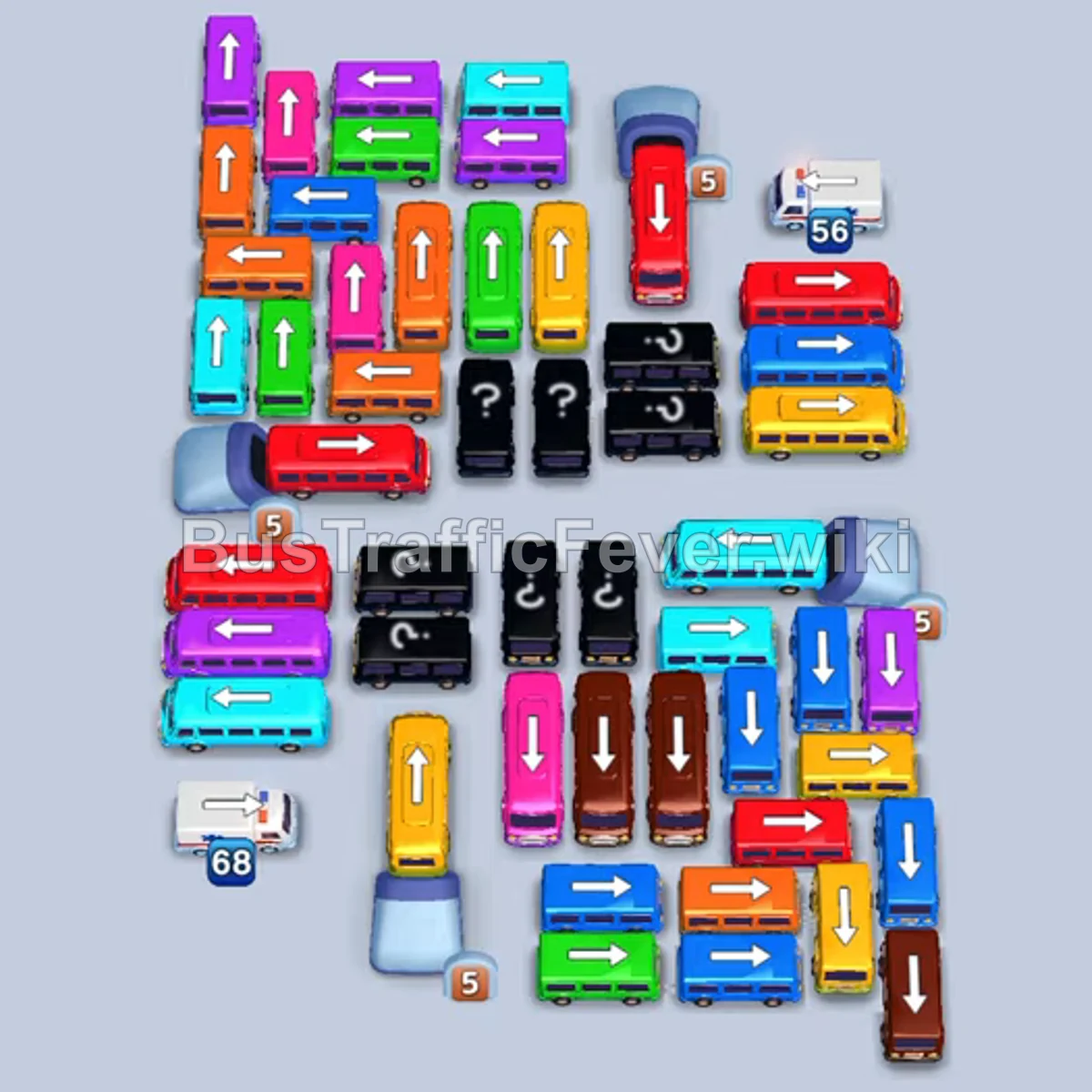
The Level 332 screenshot has question-mark groups in more than one area alongside visible colored buses and numbered elements. The written guide describes clearing the center and exposing further buses later. Use that structure to locate the corresponding phase, rather than guessing one universal trigger from the opening picture.
Which claims should you avoid assuming from a question mark?
Do not assume that every hidden bus reveals on the same trigger, that its color is random, or that a booster is required. The board images establish where question marks appear; a complete reveal sequence needs the matching walkthrough or video. Keep those two kinds of evidence separate when deciding your next move.
This guide does not claim a single tap-to-reveal rule for all boards. If your bus behaves differently from the example, compare its exact level layout and the point reached in the solution. For more labeled challenges, browse the Hard and Super Hard guide; for your exact number, use the level walkthrough directory.
Related Levels
levels
Bus Traffic Fever Level 371 Answer & Walkthrough Solution
Bus Traffic Fever Level 371 solution: Tap the green bus pointing upward on the top rim to take the first slot and begin boarding green passengers.
levels
Bus Traffic Fever Level 372 Answer & Walkthrough Solution
Bus Traffic Fever Level 372 solution: Tap the blue bus on the lower-left wing.
levels
Bus Traffic Fever Level 373 Answer & Walkthrough Solution
Bus Traffic Fever Level 373 solution: Tap the long red bus facing left at the bottom-left base of the first "4" to send it to the first parking slot.